ENTERPRISE CASE STUDY · Aligned Automation
Multi Source Data Ingestion
Multiple Structured & Unstructured Data Ingestion to AWS Systems in Mutli tier AWS Serverless Architecture.
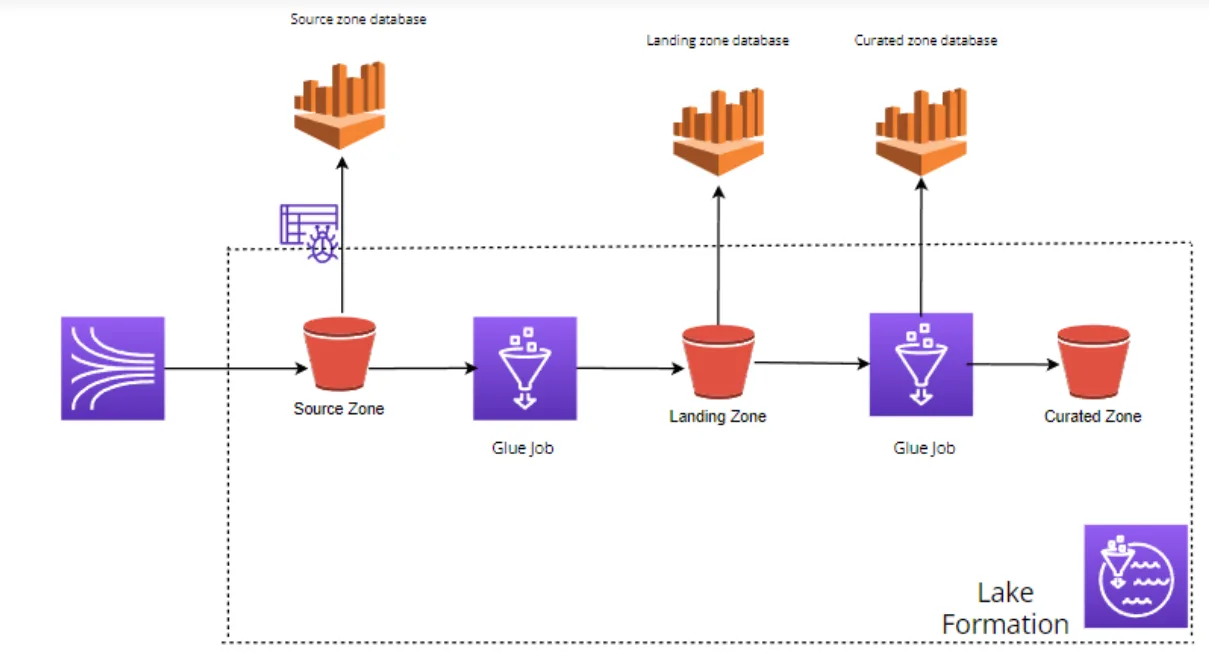
Project overview
This project focused on building a scalable data ingestion pipeline to consolidate learning and development data from multiple sources into a centralized PostgreSQL database.
The solution followed EDB data layering principles (Raw → Refined → Conformed), enabling structured data processing, analytics, and API-based data access.
Project Description
The LRL application is a legacy learning system used for managing course and training data. This project modernized its data architecture by ingesting data from Excel, CSV files, and PostgreSQL databases into a unified cloud-based system.
Using AWS services and PySpark, raw data was cleansed, transformed, and structured into refined and conformed layers, ensuring high data quality and consistency across systems.
Key Features
- Multi-source data ingestion (Excel, CSV, PostgreSQL)
- Layered architecture: Raw → Refined → Conformed
- Serverless data pipeline using AWS services
- Automated event-driven processing using EventBridge
- API layer for data access from conformed database
- Secure and scalable cloud infrastructure
Technologies Used
Cloud: AWS (S3, Lambda, Glue, EventBridge, RDS) Processing: PySpark, Python Database: PostgreSQL (RDS) DevOps: GitHub, CodePipeline, CloudFormation (YAML) Tools: SQL, JIRA
Architecture Highlights
- Raw data ingested into S3 via file uploads and database extraction
- EventBridge triggers Lambda functions on file upload events
- Lambda functions initiate Glue ETL jobs
- PySpark scripts transform raw data into refined PostgreSQL tables
- Business logic applied to create conformed data layer
- Serverless API exposes conformed data for end users
Roles & Responsibilities
- Gathered requirements and analyzed legacy LRL application workflows
- Designed AWS architecture, data flow diagrams, and ER diagrams
- Created GitHub repositories for Dev, QA, and Prod environments
- Developed CloudFormation YAML templates for infrastructure setup
- Configured IAM roles, S3 buckets, Lambda, Glue, EventBridge, and RDS
- Developed Lambda functions to trigger Glue jobs via event-driven architecture
- Built PySpark scripts for data cleansing and ingestion into refined layer
- Implemented transformation logic for conformed data layer
- Developed serverless APIs for data access
- Deployed pipelines using AWS CodePipeline
- Maintained technical documentation and conducted walkthrough sessions
Challenges & Solutions
- Challenge: Handling multiple input formats Solution: Built flexible PySpark ingestion framework
- Challenge: Ensuring data consistency across layers Solution: Applied structured Raw → Refined → Conformed model
- Challenge: Automating pipeline execution Solution: Implemented event-driven architecture using EventBridge & Lambda
Impact & Outcome
- Centralized learning data into a single reliable data source
- Improved data quality and accessibility for analytics
- Reduced manual intervention through automation
- Enabled real-time and API-based data access
- Established scalable cloud-based data ingestion framework
Future directions
Ideas identified for future development.
- Real-time streaming ingestion using Kafka or Kinesis
- Advanced monitoring dashboards (CloudWatch / Grafana)
- Data catalog integration for metadata management
- Enhanced security with fine-grained access controls
This case study summarizes professional work. Enterprise source code and internal data are not publicly available.